Introduction: Why Google’s Trust Matters More Than Rankings
Ranking on Google is no longer just about keywords and backlinks. In 2026, Google cares deeply about who is behind the content, not just what the content says. This shift is driven by one core framework: E-E-A-T.
If your tech company publishes blogs, landing pages, or thought leadership content, Google is actively evaluating whether your brand is experienced, expert, authoritative, and trustworthy. Without these signals, even well-written content may struggle to rank.
This guide explains what E-E-A-T really means, why it matters for tech companies, and how you can systematically build Google’s trust to improve visibility, credibility, and long-term organic growth.
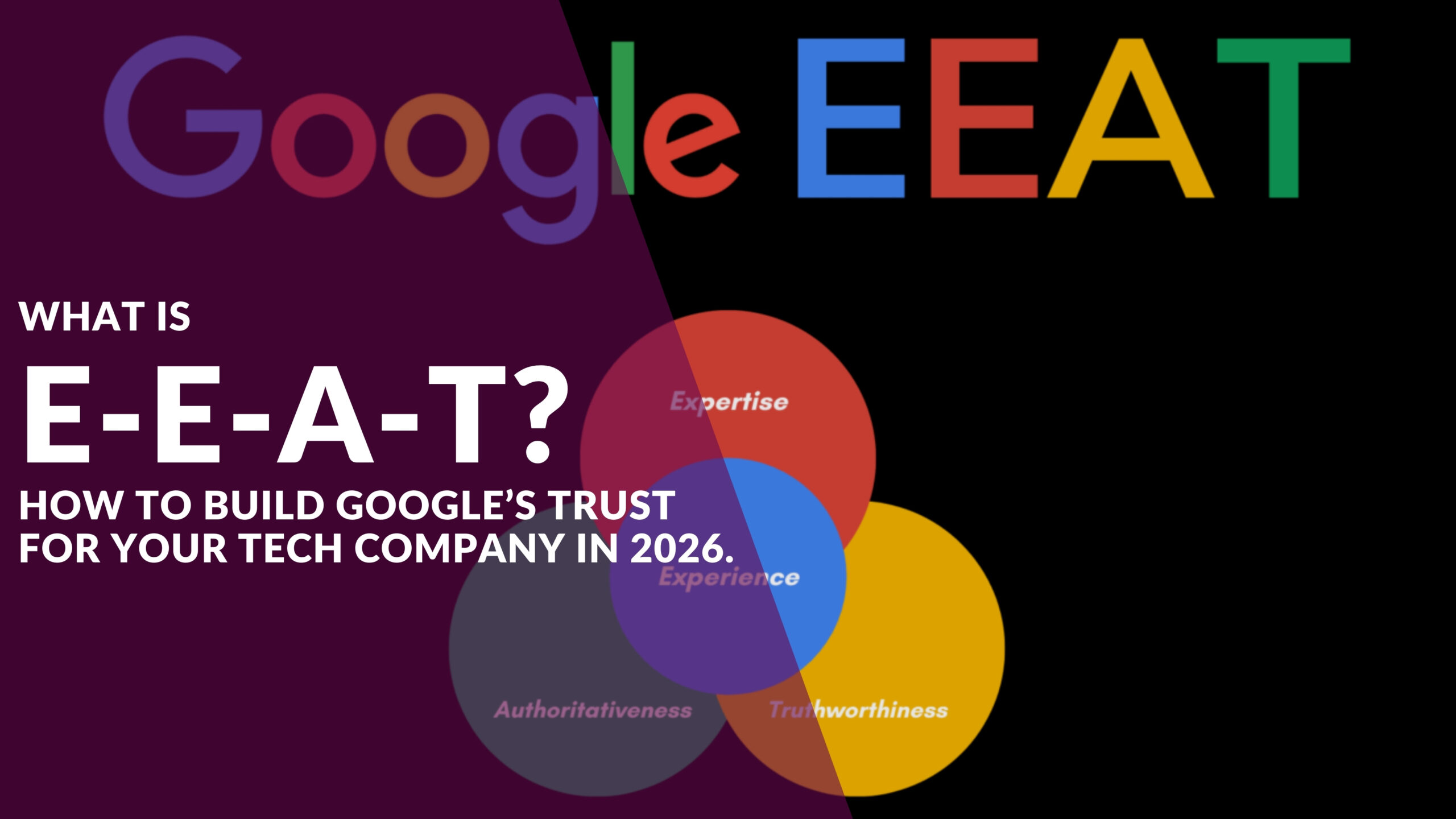
What Is E-E-A-T?
E-E-A-T stands for:
- Experience
- Expertise
- Authoritativeness
- Trustworthiness
This framework comes directly from Google’s Search Quality Rater Guidelines, which are used to evaluate the quality of search results. While E-E-A-T is not a single ranking factor, it strongly influences how Google assesses content quality—especially in competitive and high-stakes industries.
For B2B tech companies, E-E-A-T determines whether Google sees your website as a credible source of information or just another generic content publisher.
Why E-E-A-T Is Critical for Tech Companies
Tech companies often operate in complex, high-impact domains such as software development, cybersecurity, AI, fintech, and SaaS. These areas influence business decisions, finances, and data security—making trust non-negotiable.
Google applies higher quality standards to content that could affect users’ businesses or livelihoods. As AI-generated content floods the internet, Google increasingly prioritizes human expertise and real-world experience.
Strong E-E-A-T signals help your tech company:
- Rank higher for competitive keywords
- Build credibility with enterprise buyers
- Reduce dependence on paid ads
- Future-proof content against algorithm updates
Understanding Each Component of E-E-A-T
Experience: Showing You’ve Actually Done the Work
Experience refers to first-hand, real-world involvement with the topic. Google wants evidence that your content comes from people who have actually solved the problems they write about.
For tech companies, experience can be demonstrated through:
- Real client case studies
- Implementation walkthroughs
- Screenshots, code snippets, or demos
- Lessons learned from real projects
Content written from experience performs better than theoretical explanations because it reflects practical knowledge, not surface-level research.
Expertise: Proving You Know What You’re Talking About
Expertise focuses on the depth and accuracy of your knowledge. Google evaluates whether your content is written by someone with genuine subject-matter expertise.
Tech companies can demonstrate expertise by:
- Publishing in-depth technical guides
- Explaining complex concepts clearly
- Avoiding vague or generic advice
- Using precise terminology correctly
Expertise is reinforced when content is authored or reviewed by professionals with relevant backgrounds, such as engineers, developers, analysts, or consultants.
Authoritativeness: Building Industry Recognition
Authoritativeness reflects how others perceive your brand. Google looks for external validation that confirms your company is respected within its industry.
Signals of authority include:
- Mentions on reputable websites
- Backlinks from trusted publications
- Speaking engagements and conferences
- Partnerships and certifications
Authority grows over time and is closely tied to digital PR, brand building, and consistent thought leadership.
Trustworthiness: Making Your Business Transparent and Reliable
Trustworthiness is the foundation of E-E-A-T. Even expert content will struggle if users cannot trust your business.
Trust signals include:
- Clear contact information
- Transparent pricing and policies
- Secure website (HTTPS)
- Accurate, up-to-date content
- Honest claims without exaggeration
For tech companies, trust is especially important when dealing with data, security, and long-term contracts.
How Google Evaluates E-E-A-T Signals
Google does not use a single E-E-A-T score. Instead, it evaluates many indirect signals across your website and brand presence.
These include:
- Content quality and depth
- Author information and credentials
- Website transparency
- Brand mentions across the web
- User engagement and satisfaction
Strong E-E-A-T emerges from consistent patterns, not one-off optimizations.
How to Build E-E-A-T for a Tech Company (Step-by-Step)
1. Create Author Pages With Real Credentials
Every blog post should be connected to a real person or clearly defined expert team.
Best practices include:
- Detailed author bios
- Professional background and experience
- Links to LinkedIn or GitHub
- Role within the company
This helps Google associate content with real expertise, not anonymous publishing.
2. Publish Case Studies and Proof-Based Content
Nothing demonstrates experience better than real results.
High-impact content includes:
- Client success stories
- Before-and-after metrics
- Technical breakdowns of solutions
- Challenges and lessons learned
Case studies are powerful E-E-A-T assets and also perform well in BOFU searches.
3. Build Topic Authority Through Depth, Not Volume
Instead of publishing dozens of shallow blogs, focus on owning specific topics relevant to your services.
For example:
- Technical SEO
- JavaScript performance
- SaaS architecture
- AI implementation
Cover each topic comprehensively with interlinked content to signal authority and depth.
4. Strengthen Trust Signals Across Your Website
Trust is built through clarity and consistency.
Ensure your website includes:
- About Us page with company story
- Clear service descriptions
- Privacy policy and terms
- Up-to-date content
- Professional design and UX
These elements reassure both users and search engines.
5. Earn Authority Through Digital PR and Mentions
Authority cannot be faked—it must be earned.
Effective strategies include:
- Publishing original research
- Providing expert commentary to journalists
- Contributing to reputable tech publications
- Speaking at industry events
Each high-quality mention strengthens your authority profile.
E-E-A-T and AI Content: What Changes in 2026?
AI-generated content is everywhere, and Google is actively filtering low-value, generic output. In response, Google increasingly favors content that demonstrates human experience and originality.
Tech companies using AI must:
- Add expert insights
- Validate information
- Include real examples
- Avoid mass-produced content
AI can assist—but E-E-A-T must come from humans.
Common E-E-A-T Mistakes Tech Companies Make
Some common pitfalls include:
- Publishing anonymous content
- Writing for keywords instead of users
- Making exaggerated claims
- Ignoring author credibility
- Lacking transparency
Avoiding these mistakes can significantly improve content performance.
Measuring the Impact of E-E-A-T
While E-E-A-T cannot be measured directly, its impact shows up in:
- Improved rankings over time
- Higher click-through rates
- Increased brand searches
- Better engagement metrics
- Stronger backlink profiles
E-E-A-T is a long-term investment, not a quick win.
Final Thoughts: E-E-A-T Is a Business Strategy, Not Just SEO
E-E-A-T is not about tricking Google—it’s about building a credible, trustworthy brand that deserves visibility.
For tech companies, strong E-E-A-T aligns SEO with business growth, brand reputation, and customer trust. When you focus on real expertise, proven experience, and transparency, Google rankings follow naturally.
In 2026 and beyond, trust is the true competitive advantage.