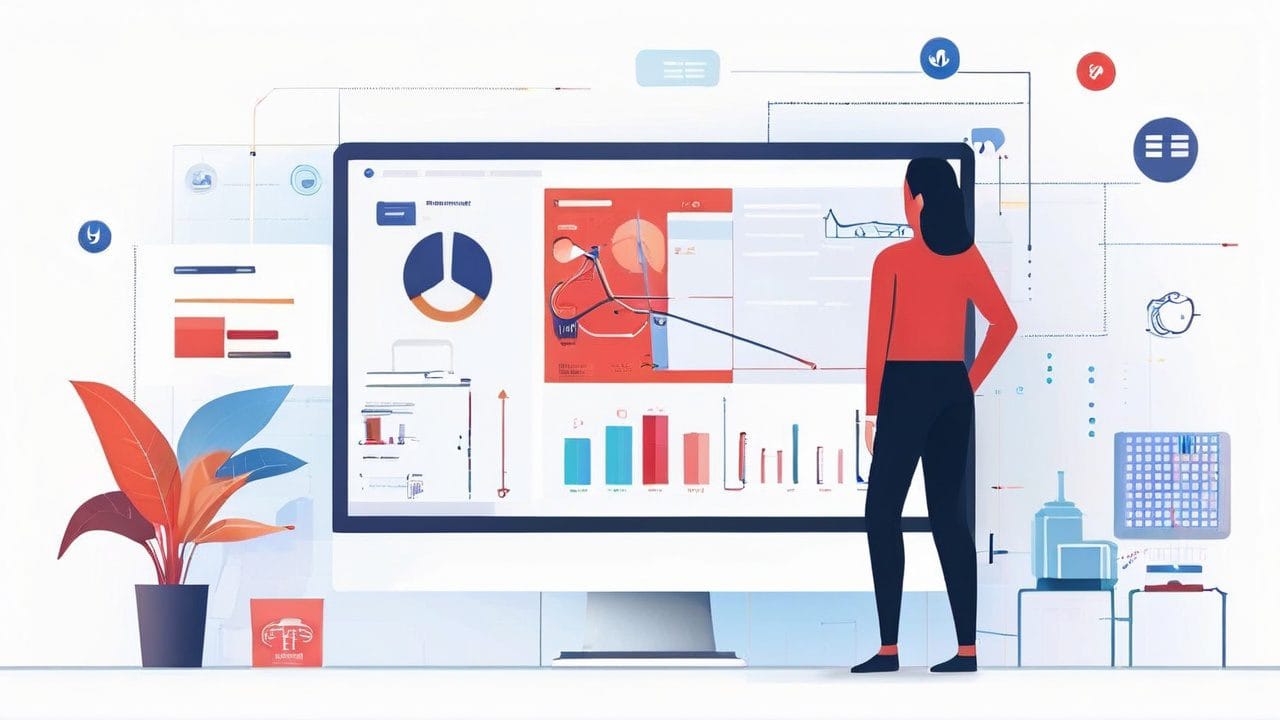
In today’s fast-paced digital world, the role of Artificial Intelligence (AI) in digital marketing is becoming increasingly significant. AI is transforming how businesses engage with their customers, make data-driven decisions, and deliver personalized experiences. By leveraging machine learning for marketing, businesses can gain a competitive edge, improve ROI, and streamline marketing processes. Let’s dive into the growing impact of AI-driven marketing tools and how they are shaping the future of digital marketing.
1. AI-Powered Personalization
One of the most notable advantages of AI in digital marketing is its ability to deliver hyper-personalized experiences. AI-powered personalization enables businesses to analyze user behavior, preferences, and purchase history in real-time. Based on this data, AI algorithms can recommend products, create tailored content, and send targeted offers, resulting in higher engagement and conversion rates. Companies like Amazon and Netflix are pioneers in using AI to offer personalized recommendations, setting a benchmark for other businesses to follow.
2. Chatbots and Customer Service Automation
AI-powered chatbots have revolutionized customer service by offering instant responses to customer inquiries, 24/7. These chatbots can handle a variety of tasks, from answering FAQs to assisting with product purchases and resolving issues. By automating customer service with AI chatbots, businesses can reduce response times, improve customer satisfaction, and free up human agents to focus on more complex tasks. Tools like Drift and Intercom are widely used for AI-driven customer interactions.
3. Predictive Analytics for Campaign Optimization
Predictive analytics is another powerful AI tool that allows marketers to make data-driven decisions. By analyzing past campaign data and user behavior, AI algorithms can predict future trends and optimize marketing strategies accordingly. This helps businesses allocate their resources more efficiently, ensuring that marketing budgets are spent on the most effective channels and tactics. Machine learning for marketing also enables A/B testing on a massive scale, providing insights into which content, ads, or emails are resonating most with the target audience.
4. AI in Content Creation and Curation
Content creation can be time-consuming, but AI is helping marketers automate the process. AI-driven marketing tools like Copy.ai and Jasper.ai can generate blog posts, social media captions, and ad copy with minimal input from marketers. Additionally, AI-powered platforms can curate personalized content for users based on their interests and behavior, ensuring that businesses consistently deliver relevant content to their audience.
5. AI for Programmatic Advertising
Programmatic advertising is an AI-driven approach that automates the process of buying and optimizing digital ads. Using AI algorithms, programmatic platforms analyze user data and real-time bidding to serve the right ad to the right person at the right time. This increases the efficiency and effectiveness of ad campaigns, reducing wasted ad spend and driving better results. Platforms like Google Ads and The Trade Desk use programmatic technology to improve campaign performance.
Conclusion:
The impact of AI in digital marketing is undeniable. From personalized experiences and chatbots to predictive analytics and programmatic advertising, AI-driven marketing tools are reshaping how businesses engage with their audience and optimize their strategies. As AI technology continues to evolve, businesses that embrace AI will be well-positioned to lead the charge in the future of digital marketing.