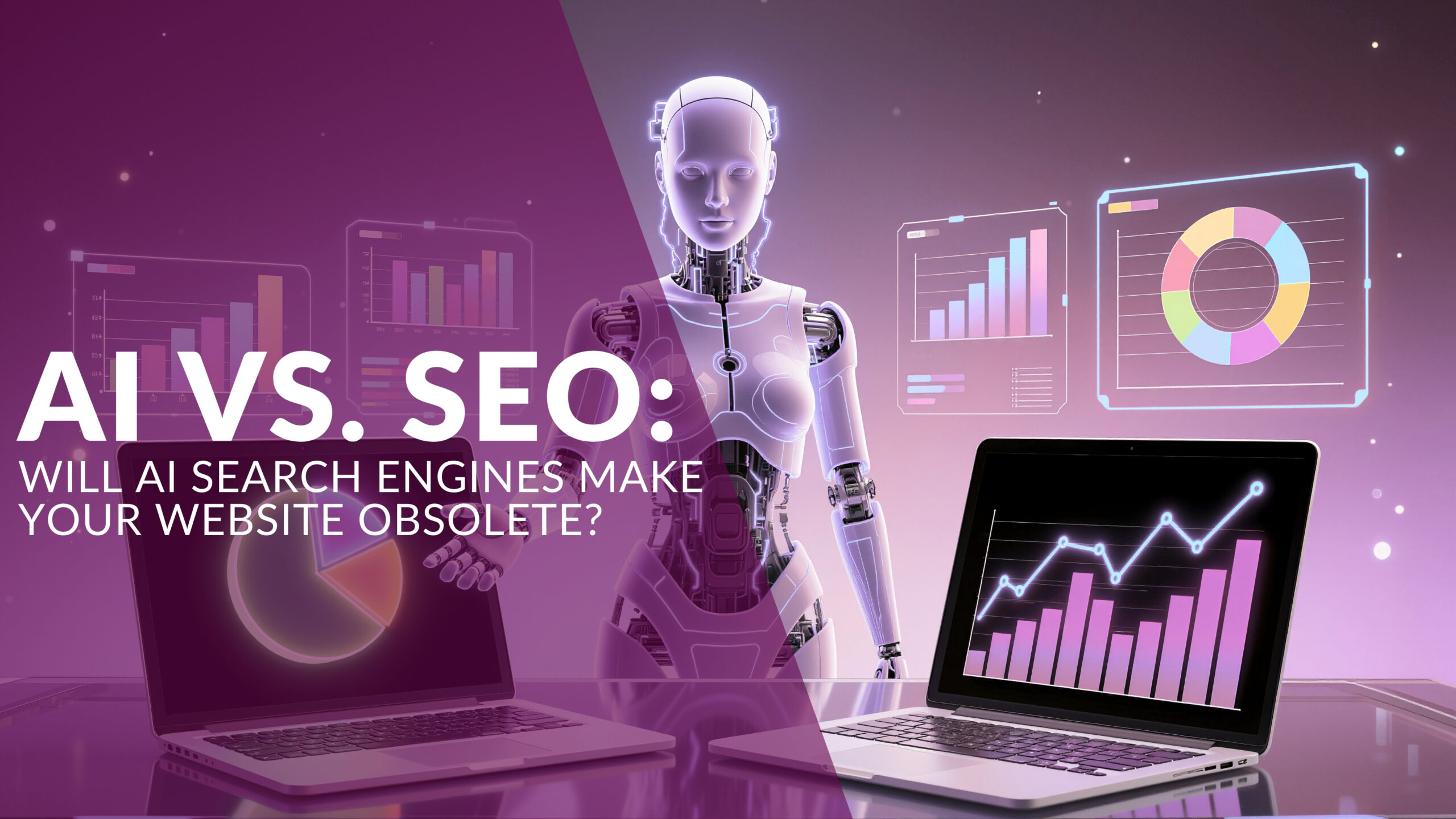
Introduction: The Question Every Business Is Asking
AI-powered search engines like Google’s SGE, Perplexity, and ChatGPT-style answers have changed how people find information online. Instead of clicking links, users increasingly receive direct answers inside search results.
For business owners and marketers, this shift raises a serious concern:
If AI gives users answers instantly, will websites still matter?
The short answer is no—websites are not becoming obsolete.
But SEO is changing, and businesses that fail to adapt will lose visibility.
This article explains how AI search works, what it means for traditional SEO, and how websites can remain essential in an AI-driven search landscape.
How AI Search Engines Work
Traditional search engines rank pages and send users to websites. AI-driven search systems go a step further by synthesizing information from multiple sources and presenting it directly to users.
These systems rely on:
- Large language models
- Structured and unstructured web data
- Authority and trust signals
- User intent analysis
AI search does not replace websites—it depends on them as training data and trusted sources.
Why AI Search Feels Like a Threat to SEO
The fear around AI search comes from one major shift: fewer clicks.
When users get answers directly in search results, informational websites may see reduced traffic. This is especially true for simple queries like definitions or basic how-to questions.
However, this change mostly affects low-intent, surface-level searches, not high-value business queries.
The Types of Searches Most Affected by AI
Informational Queries
AI performs well for:
- Definitions
- Basic explanations
- Quick summaries
These queries were already trending toward zero-click results before AI.
Transactional and High-Intent Queries
AI struggles to replace:
- Product comparisons
- Service evaluations
- Pricing decisions
- B2B purchase research
For these searches, users still want depth, proof, and human validation—something only websites provide.
Why SEO Is Not Dead—It’s Evolving
SEO has always evolved with search technology. From keyword stuffing to mobile-first indexing, adaptation has been constant.
AI search changes how visibility is earned, not whether it exists.
Modern SEO now focuses on:
- Authority over volume
- Intent over traffic
- Trust over tactics
Websites that provide genuine value continue to win.
E-E-A-T Becomes the Core of AI SEO
AI search engines prioritize content from sources that demonstrate Experience, Expertise, Authoritativeness, and Trustworthiness.
AI models rely on:
- Recognized brands
- Credible authors
- Accurate, well-structured content
- Consistent topical authority
Websites with strong E-E-A-T signals are more likely to be referenced, summarized, and cited by AI systems.
The Rise of Zero-Click Search (And Why It’s Not the End)
Zero-click searches existed long before AI through featured snippets, knowledge panels, and instant answers.
While traffic may decrease for some queries, visibility does not.
Brands that appear in AI summaries:
- Gain trust
- Build awareness
- Influence decision-making
- Capture demand later in the funnel
Visibility without a click still has business value.
How to Optimize Websites for AI Search Engines
Focus on High-Intent Content
AI may answer basic questions, but it cannot replace:
- In-depth guides
- Case studies
- Comparisons
- Opinionated insights
Create content that helps users make decisions, not just learn facts.
Build Strong Topical Authority
Topic clusters and pillar pages signal expertise.
By covering a topic comprehensively, your website becomes a trusted source AI systems rely on for accurate information.
Strengthen Brand Signals
AI trusts brands more than anonymous websites.
Improve:
- Branded search presence
- Mentions across authoritative sites
- Consistent messaging
- Clear authorship
Brand building is now an SEO strategy.
Use Structured Data and Clear Formatting
AI systems extract information more easily from:
- Structured data
- Clear headings
- Bullet points
- Concise explanations
Schema markup and content clarity increase your chances of being referenced.
SEO Metrics That Matter in an AI World
Traffic alone is no longer the only success metric.
Modern SEO focuses on:
- Visibility in search results
- Brand mentions
- Conversion quality
- Assisted conversions
- Long-term demand growth
AI-driven search shifts the focus from clicks to influence.
What Types of Websites Will Struggle?
Websites that rely on:
- Thin content
- Aggregated information
- AI-generated summaries
- No original insights
These sites offer nothing unique for AI or users to value.
What Types of Websites Will Win?
Winning websites:
- Provide expert insights
- Share real-world experience
- Publish original research
- Offer tools, products, or services
- Build strong brands
AI amplifies trusted sources—it does not replace them.
The Opportunity AI Search Creates
AI search filters noise.
As low-quality content disappears from visibility, high-quality websites face less competition. This creates a massive opportunity for businesses willing to invest in credibility and depth.
Those who adapt early will dominate future search landscapes.
Preparing Your SEO Strategy for the AI Era
A future-proof SEO strategy includes:
- Technical excellence
- Strong E-E-A-T signals
- Topic cluster content
- Brand-focused marketing
- Conversion-oriented pages
SEO is no longer just about rankings—it’s about relevance.
Final Thoughts: AI Needs Your Website More Than You Think
AI search engines cannot exist without websites. They rely on original, authoritative sources to function accurately.
Websites are not becoming obsolete.
Low-value websites are.
Businesses that focus on trust, expertise, and real value will remain essential—no matter how search evolves.