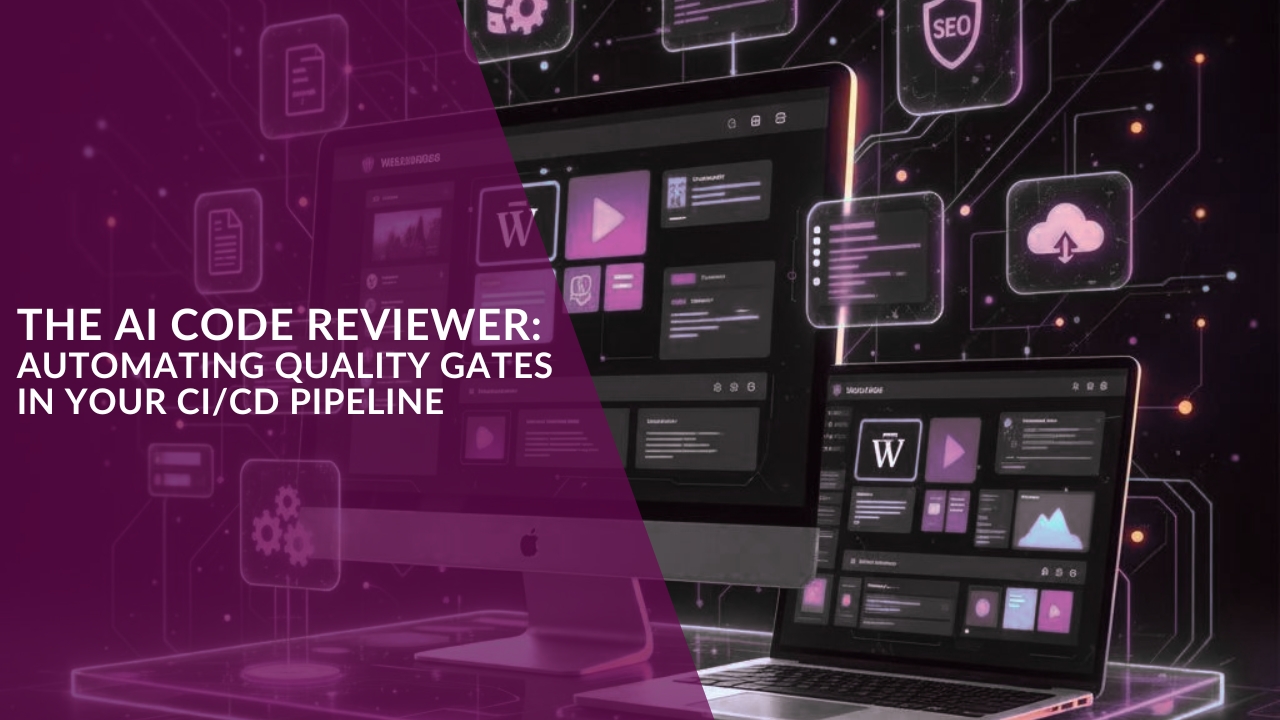
In the rapid-fire development cycles of 2026, the traditional pull request (PR) process has become a major bottleneck. While senior engineers are the best at spotting architectural flaws, they are often bogged down by “mechanical” reviews—checking for missing tests, style violations, and common security anti-patterns.
The solution is not more meetings; it is automated quality gates powered by AI. By integrating an AI reviewer directly into your CI/CD pipeline, you can catch trivial issues in seconds, ensuring that when a human reviewer steps in, they are focusing on high-level logic and strategy.
The Shift from Linters to “Agentic” Reviewers
For years, we relied on static linters. They were fast but “dumb,” often missing context-dependent bugs. In 2026, AI code reviewers have evolved into agentic partners that understand the semantics of your codebase.
These tools don’t just find a missing semicolon; they recognize that a specific data flow might lead to a SQL injection or that a new function deviates from your team’s established design patterns.
Key Benefits for Engineering Teams
- 40-50% Faster Review Cycles: AI provides instant feedback the moment a PR is opened, allowing developers to fix issues before a teammate even sees them.
- Consistent Quality Gates: Unlike humans, AI never gets “review fatigue” on Friday afternoon. It applies the same rigorous standards to every single line of code.
- Proactive Security: By leveraging “Symbolic AI” and taint analysis, modern tools identify vulnerabilities like insecure data parsing across the entire application.
- Accelerated Onboarding: AI comments act as “mini-lessons,” helping junior developers learn the team’s style and best practices in real-time.
3 Ways to Integrate AI into Your Workflow
Implementing an AI reviewer shouldn’t disrupt your existing flow. Here is how leading teams are doing it in 2026:
1. Pre-Commit Hooks
Catch issues at the source. By running a “lite” AI scan on the developer’s machine before code is even pushed, you prevent obvious errors from ever reaching the repository.
2. Pull Request Enhancement (The “Sweet Spot”)
This is the most popular integration point. When a PR is opened, an AI agent (like GitHub Copilot or Kodus) automatically scans the diff and provides inline comments, summaries, and risk indicators. This allows the developer to “self-correct” before the formal human review begins.
3. Build-Time Security & Compliance Gates
For mission-critical applications, AI acts as a final “gatekeeper” in the CI/CD pipeline. If the AI detects a high-severity security flaw or a violation of regulatory compliance, it can automatically block the build, preventing insecure code from reaching production.
Challenges: AI is a Partner, Not a Replacement
Despite the speed, AI still struggles with architectural trade-offs and business ethics. It might suggest a code change that is technically efficient but violates a specific long-term product goal. The “Human-in-the-loop” model remains essential: the AI proposes, but the human owner remains the one who hits the “Merge” button.
Future Outlook: The Self-Correcting Repo
By late 2026, we expect to see “Autofix” capabilities become standard. Instead of just flagging a bug, the AI will propose a separate PR that fixes the issue, complete with the necessary unit tests to prove it works.
Conclusion
The goal of AI in code review is to elevate the human developer, not replace them. By automating the routine and the mechanical, we free our best minds to focus on what truly matters: innovation and complex problem solving.
Is your review process a bottleneck? Start by integrating a basic AI review layer into your PRs and watch your velocity skyrocket.