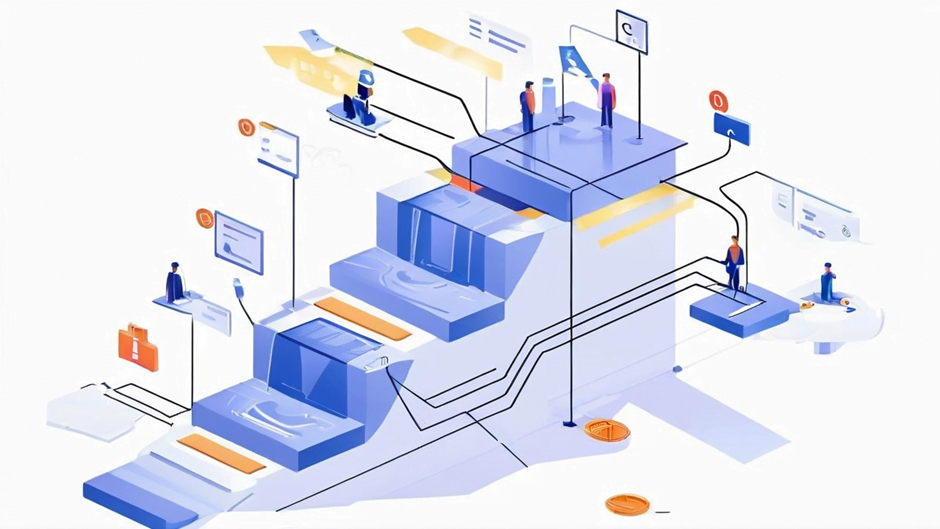
Introduction: The Trap of the “Big Bang” Rewrite
In the architectural landscape of 2026, many enterprises find themselves weighed down by aging, monolithic legacy systems. These “monoliths” often hold trillions of dollars in value but are increasingly expensive to maintain, difficult to scale, and slow to change. When faced with this challenge, the instinct for many engineering leaders is a “Big Bang” rewrite—building a brand-new system from scratch and switching over all at once.
However, historical data suggests that Big Bang rewrites are high-risk endeavors that frequently result in failure, budget overruns, or “Second System Syndrome”. The modern, 2026-preferred alternative is the Strangler Fig pattern. Inspired by the way a strangler fig tree grows around a host tree and eventually replaces it, this pattern allows for a safe, iterative migration that delivers value from week one.
Why Choose the Strangler Fig Pattern?
The core philosophy of the Strangler Fig pattern is risk mitigation through incrementalism. By decomposing a monolith into “thin slices” rather than an all-or-nothing replacement, teams can achieve several critical business objectives:
- Zero Downtime: The legacy system remains operational as the safety net throughout the entire migration process.
- Continuous Value Delivery: Instead of waiting years for a new platform, you can ship your first microservice in a matter of weeks.
- Reversibility: If a newly deployed microservice fails or underperforms, you can instantly route traffic back to the original monolith logic at the gateway level.
- Learning Cycles: Your team learns the nuances of your new cloud-native architecture on a small scale before tackling the core business logic.
The 4-Phase Implementation Roadmap
Modernizing a legacy application requires a structured methodology to ensure the migration doesn’t become a “spaghetti” of old and new services.
Phase 1: Assess & Plan (The Audit) Before writing any code, you must identify the boundaries of your monolith. Look for “bounded contexts”—areas of the code that are relatively independent, such as User Authentication, Billing, or Inventory. Rank these by their potential for business value and their ease of extraction.
Phase 2: Transform (The Facade) The first technical step is to place a Facade or API Gateway in front of your monolith. Initially, this gateway does nothing but pass 100% of traffic through to the legacy system. This establishes the routing infrastructure that will eventually allow you to split traffic between the old and new worlds.
Phase 3: Decompose & Build (The Extraction) Once the gateway is in place, you begin the actual “strangling”.
- Build the New Service: Develop a specific feature (e.g., the /orders API) as a modern microservice.
- Intercept Traffic: Update the API Gateway to route all /orders requests to the new microservice while sending all other requests to the monolith.
- Handle Data: Use patterns like Change Data Capture (CDC) to ensure the new service’s database stays in sync with the monolith’s database during the transition.
Phase 4: Decommission (The Sunset) Once the new microservice has been proven stable in production, you can safely delete the corresponding dead code from the monolith. The monolith “shrinks,” its complexity decreases, and eventually, the last piece of legacy code is removed, allowing the old server to be decommissioned entirely.
Critical Success Factor: The Anti-Corruption Layer (ACL)
One of the most common pitfalls in this migration is allowing the “messy” domain models of the legacy system to leak into the new microservices. To prevent this, architects use an Anti-Corruption Layer (ACL). This layer acts as a translator, ensuring that the new services maintain a clean, modern design even when they are required to communicate with the old system during the migration period.
Conclusion: An Evolutionary Approach to Engineering
The Strangler Fig pattern represents a shift in how we think about software: not as a static building to be replaced, but as a living organism that must evolve. In 2026, the competitive advantage belongs to companies that can modernize their core systems without stopping the business. By adopting a “strangle first” mentality, you protect your company’s legacy while building its future.